
My Hair Was Dead (Until I Learned This)
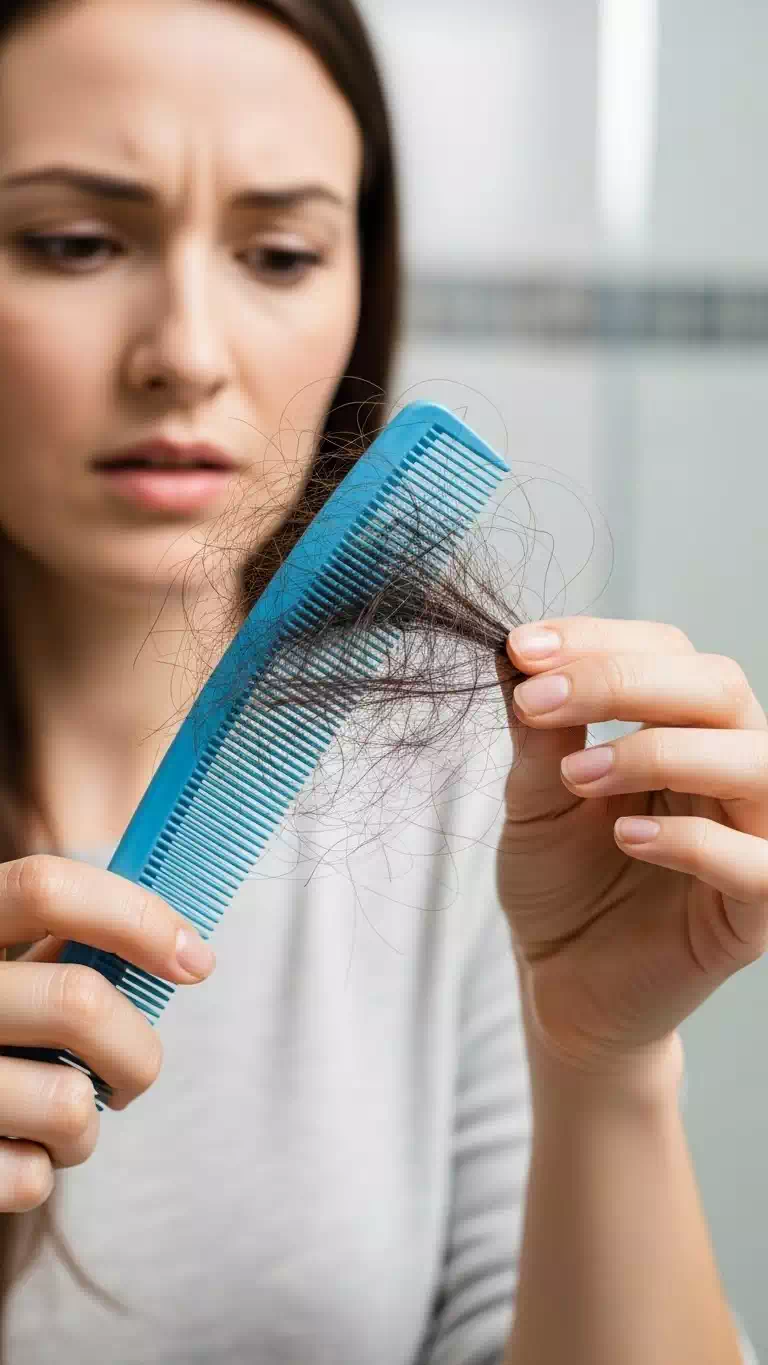
I’ll never forget standing in my bathroom, holding a clump of hair that had just broken off in my hand. Not fallen out—broken. Like a dried-out twig snapping in half.
Years of bleaching, heat styling, and generally treating my hair like it was indestructible had finally caught up with me. My hair felt like straw. It looked dull and lifeless. The ends were so brittle they’d break if I looked at them wrong.
I tried everything—expensive salon treatments, miracle serums, deep conditioners that promised the world. Some helped a little. Most did nothing. I was ready to just chop it all off and start over.
Then a hairstylist friend told me something that changed everything: “Your hair doesn’t need more products. It needs the right balance of protein and moisture.”
That simple concept—protein-moisture balance—transformed my hair in 30 days. No salon appointments. No expensive treatments. Just understanding what my hair actually needed and giving it that.
Today, my hair is healthier than it’s been in years. People ask what I “did” to it. The answer? I stopped guessing and started listening to what my hair was telling me.
Here’s exactly what I learned—and how you can repair your damaged hair at home, for real this time.
reviewed
About Organic Cleaning Products
First: Can Damaged Hair Actually Be Repaired?
Let’s be honest about what’s possible.
The truth: Once hair is damaged, you can’t technically “repair” it back to its original state. Hair is dead protein. It doesn’t heal like skin.
But here’s what you CAN do: You can dramatically improve how it looks and feels. You can stop further damage. You can strengthen what’s left. And you can grow out healthy new hair while protecting what you have.
Think of it like this—you can’t unburn toast, but you can make it edible with the right toppings. Your hair might not be “virgin” again, but it can look and feel healthy, shiny, and strong.
The key is understanding what your hair needs. And that’s where most people get it wrong.
The Problem: Everyone’s Using the Wrong Treatments
Walk into any store and you’ll see hundreds of products promising to “repair” damaged hair. Deep conditioners. Hair masks. Leave-in treatments. Oils. Serums.
They all say they’ll fix your hair. But here’s what they don’t tell you:
Your hair needs different things depending on what kind of damage you have.
Dry, brittle hair that breaks? That needs moisture.
Limp, stretchy hair that won’t hold a curl? That needs protein.
Use the wrong treatment, and you’ll make things worse. Load moisture onto protein-starved hair, and it gets even limper. Pile protein onto already-brittle hair, and it gets even more dry and breaks more easily.
This is why nothing has worked for you. Not because your hair is “too damaged” to fix. But because you’ve been treating the wrong problem.
Understanding Protein vs. Moisture
Your hair is made of a protein called keratin. Healthy hair has a good balance of protein structure (strength) and moisture (flexibility).
When hair is damaged, one of two things happens:
Protein Loss
Damage from chemicals (bleach, color, relaxers) strips away protein. Your hair becomes:
- Limp and lifeless
- Stretchy when wet (pulls like a rubber band)
- Won’t hold curls
- Feels mushy or gummy
- Very soft but weak
Think of it like: A building losing its structural beams. The building is still standing, but it’s weak and unstable.
Moisture Loss
Damage from heat (blow dryers, flat irons) and environmental stress depletes moisture. Your hair becomes:
- Dry and rough
- Brittle and snaps easily
- Frizzy and dull
- Stiff or straw-like
- Hard to detangle
Think of it like: A dried-out sponge. It’s hard and brittle instead of soft and pliable.
Most damaged hair needs BOTH protein and moisture, but one more than the other.
Hair is dead protein; it doesn't heal, it only responds. Stop trying to 'cure' it and start balancing it—once you master the protein-moisture scale, your hair's health becomes a choice, not a mystery.
The Simple Test: What Does YOUR Hair Need?
Here’s how to figure out what your hair is crying out for:
The Stretch Test
Take a single strand of clean, wet hair and gently stretch it.
If it stretches easily and doesn’t snap back: → Your hair needs PROTEIN
If it snaps immediately with little stretch: → Your hair needs MOISTURE
If it stretches a little then snaps back: → Your hair has good balance (lucky you!)
The Visual Check
Look at your hair honestly:
Signs you need PROTEIN:
- Hair feels too soft, almost slimy when wet
- Won’t hold any style
- Tangles constantly
- Looks limp and flat
- Color fades quickly
Signs you need MOISTURE:
- Hair feels rough and coarse
- Breaks when you comb it
- Ends are splitting and fraying
- Looks dull with no shine
- Feels crunchy or stiff
Most people with damaged hair need moisture first, then protein to strengthen.
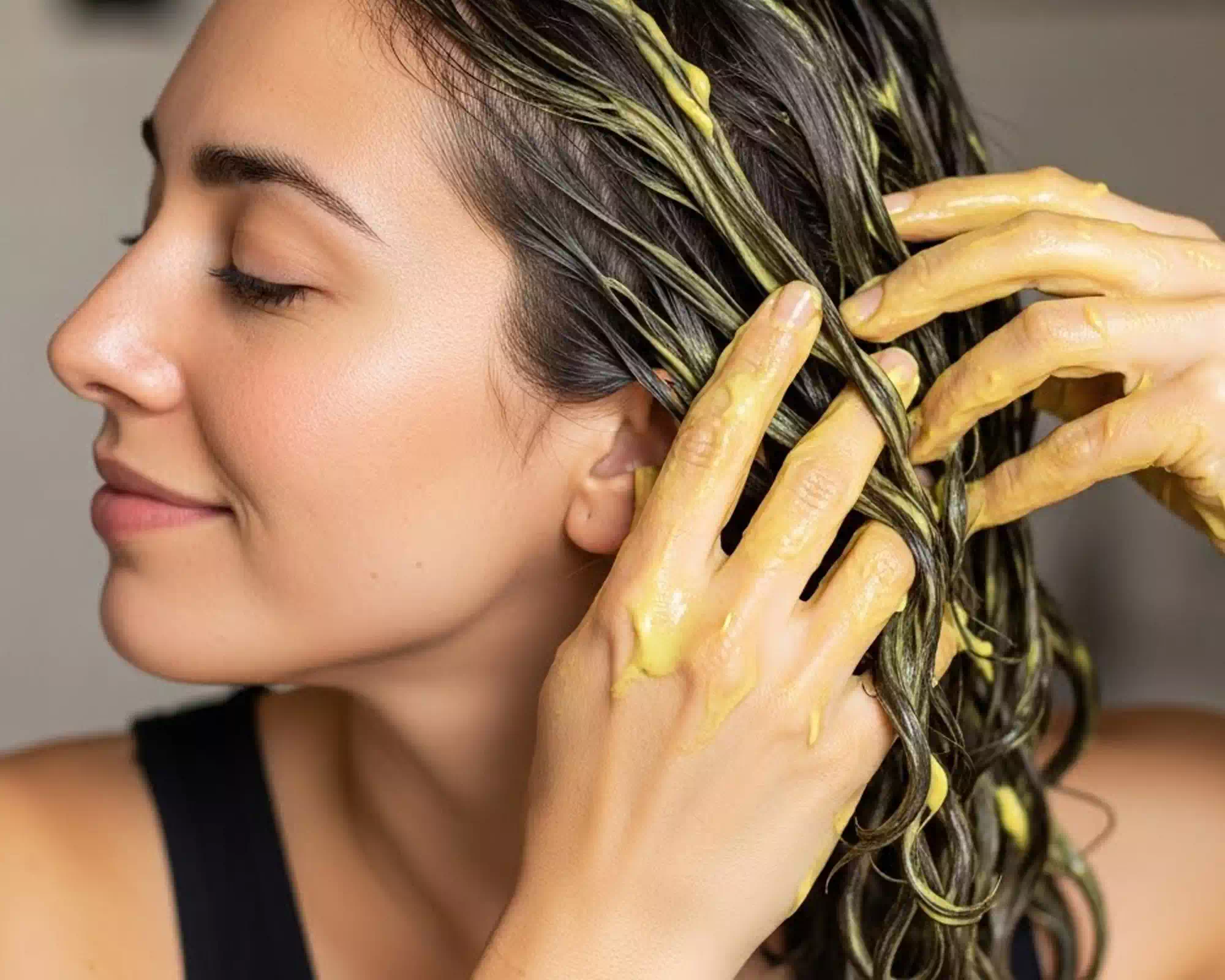
How to Repair Moisture-Damaged Hair (Dry, Brittle, Breaking)
If your hair is dry, breaking, and feels like straw, here’s your repair plan:
Step 1: Deep Moisture Treatment (Weekly)
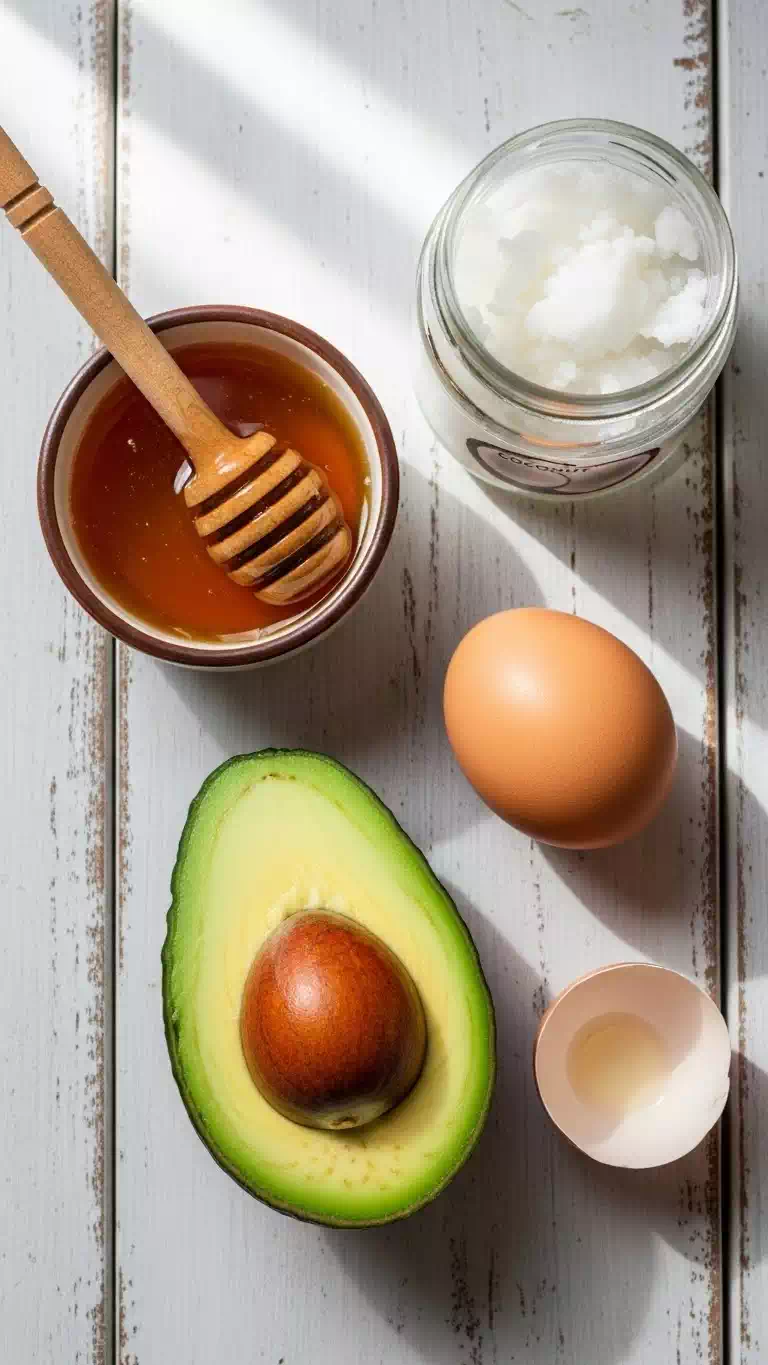
DIY Moisture Mask:
- 1/2 ripe avocado
- 2 tablespoons coconut oil
- 1 tablespoon honey
Mash together, apply to damp hair (mid-length to ends), leave for 30 minutes under a shower cap. Rinse and shampoo lightly.
Why it works: Avocado has fatty acids, coconut oil penetrates the hair shaft, honey seals in moisture.
Or buy: Look for masks with ingredients like shea butter, argan oil, glycerin, or hyaluronic acid.
Step 2: Reduce Heat Damage
I know, I know. But this is non-negotiable.
- Air dry whenever possible
- Use heat protectant EVERY time (not optional!)
- Lower your tool temperature (350°F max for most hair)
- Limit heat styling to 2-3 times per week
Reality check: You can’t repair damage while actively damaging your hair. Choose one or the other.
Step 3: The Right Products
Shampoo: Sulfate-free, moisturizing formulas. Wash 2-3 times per week, not daily.
Conditioner: Every. Single. Time. Focus on ends, leave on for 3-5 minutes.
Leave-in: A lightweight leave-in conditioner or hair oil. Apply to damp hair before styling.
My favorites:
- Olaplex No. 3 (protein + moisture)
- Shea Moisture Manuka Honey Mask (intense moisture)
- Moroccan Oil Treatment (lightweight moisture)
Step 4: Weekly Routine
Sunday: Deep moisture mask (30 min) Wednesday: Light moisture treatment (10 min) Daily: Leave-in conditioner on ends
Give it 4 weeks. You’ll see a difference in 2.
How to Repair Moisture-Damaged Hair (Dry, Brittle, Breaking)
If your hair is too soft, won’t hold style, and feels weak, you need protein:
Step 1: Protein Treatment (Every 2 Weeks)
DIY Protein Mask:
- 1 egg
- 1 tablespoon olive oil
- 1 teaspoon honey
Beat together, apply to damp hair, leave for 20 minutes (NOT longer—protein can make hair stiff). Rinse with cool water, then shampoo.
Why it works: Egg protein temporarily fills in damaged areas of your hair shaft, strengthening it.
Or buy: Look for treatments with hydrolyzed keratin, wheat protein, or silk protein.
WARNING: Don’t overdo protein. Too much makes hair stiff and brittle. Every 2 weeks is enough.
Step 2: Balance with Moisture
After a protein treatment, follow up with a moisturizing conditioner. Protein without moisture = dry, brittle hair.
Think of it like this: Protein builds the structure, moisture makes it flexible. You need both.
Step 3: The Right Products
Shampoo: Volumizing formulas (they often contain protein)
Conditioner: Lightweight, not too heavy
Avoid: Heavy oils and butters (they’ll weigh down already-limp hair)
Good options:
- Aphogee Two-Step Protein Treatment (intense protein)
- Briogeo Don’t Despair, Repair! (balanced protein-moisture)
- Any product with keratin or collagen
Step 4: Bi-Weekly Routine
Week 1: Protein treatment Sunday Week 2: Moisture treatment Sunday Alternate consistently
Daily: Lightweight leave-in with protein
This balance is crucial. All protein = brittle. All moisture = limp. Alternating = healthy.
The 30-Day Hair Repair Challenge
Here’s your complete action plan:
What You’ll Need
- Deep moisture mask (buy or DIY)
- Protein treatment (every 2 weeks)
- Heat protectant spray
- Leave-in conditioner
- Wide-tooth comb
- Silk or satin pillowcase
The Weekly Schedule
Sunday:
- Deep treatment (moisture or protein—alternate)
- Leave on for 30 minutes
- Gentle shampoo and condition
Wednesday:
- Light conditioning treatment (10 minutes)
- Or just a longer conditioning time in the shower
Daily:
- Apply leave-in to damp hair
- Let air dry when possible
- If using heat: protectant first, lower temperature
Before bed:
- Sleep on silk/satin (reduces friction and breakage)
- Or wrap hair in a silk scarf
What to Stop Doing Immediately
❌ Daily washing (strips natural oils) ❌ Hot water (use lukewarm or cool) ❌ Towel drying roughly (pat or use microfiber) ❌ Brushing wet hair (use wide-tooth comb) ❌ Tight hairstyles (causes breakage) ❌ Chemical treatments (give your hair a break!)
What to Add
✅ Scalp massage (stimulates growth) ✅ Hair supplements (biotin, collagen—if you want) ✅ UV protection (sun damages hair too) ✅ Regular trims (every 8-10 weeks removes split ends)
What to Expect (The Honest Timeline)
Week 1: Hair feels slightly softer. You might not see much visual change yet. This is normal—be patient.
Week 2: Noticeable improvement in texture. Hair feels less dry or less limp, depending on your issue.
Week 3: Visible difference. Shinier, smoother, stronger. People might comment!
Week 4: Significant improvement. Hair feels healthier, styles better, breaks less.
Month 2-3: Continued improvement as new healthy hair grows in and you protect what you have.
Reality check: Severely damaged ends won’t magically repair. You might need to trim them. But new growth will be healthy, and the rest will improve dramatically.
The Products Worth Buying (And What to Skip)
Worth Your Money
Olaplex No. 3
- Actually repairs broken bonds in hair
- Works for all hair types
- Use weekly
Briogeo Don’t Despair, Repair!
- Balanced protein and moisture
- Great for moderately damaged hair
- Smells amazing
Heat Protectant (any brand over $10)
- Non-negotiable if you use heat
- Cheaper ones don’t work as well
- Worth the investment
Silk Pillowcase
- Reduces friction breakage
- Lasts years
- Helps skin too
Skip These
❌ Hair “repair” shampoos (shampoo can’t repair, only cleanse) ❌ Anything promising “instant repair” (doesn’t exist) ❌ Super cheap treatments under $5 (won’t do much) ❌ Pills promising rapid hair growth (mostly biotin, which you can get for $10)
When to See a Professional
Sometimes you need expert help:
See a stylist if:
- Your hair is severely damaged from chemical treatments
- You’ve tried this routine for 8 weeks with zero improvement
- You’re experiencing unusual hair loss (not breakage)
- You want to color or chemically treat damaged hair
What they can do:
- Professional treatments like Olaplex in-salon
- Properly assess your hair’s condition
- Recommend specific products for your hair type
- Trim damaged ends that won’t improve
Don’t feel bad about needing professional help. Sometimes damage is too severe for DIY. A good stylist can create a treatment plan and get you back on track.
The Real Secret No One Talks About
Here’s what I learned after months of repairing my hair:
Consistency beats perfection.
You don’t need expensive treatments. You don’t need a 10-step routine. You don’t need professional help (though it can speed things up).
You need to:
- Figure out what your hair needs (protein or moisture)
- Give it that consistently
- Stop doing the things that damage it
- Be patient
That’s it. That’s the secret.
My hair didn’t transform because I found some miracle product. It transformed because I stopped guessing, started listening to what my hair needed, and consistently gave it that for 30 days straight.
Your hair will tell you what it needs. The stretch test, how it feels, how it behaves—it’s all communication. Learn to listen.
Your Hair Can Come Back
That clump of broken hair in my hand? That was my rock bottom. I thought my hair was permanently ruined.
But hair is resilient. Give it what it needs—the right balance of protein and moisture, protection from damage, time to repair—and it’ll surprise you.
You don’t need to spend hundreds of dollars. You don’t need salon-exclusive treatments. You just need to understand your hair and treat it accordingly.
Start today. Do the stretch test. Pick up a deep conditioner or make a DIY mask. Commit to 30 days of treating your hair right.
In a month, you’ll be the one holding healthy hair in your hand, amazed at how much can change when you stop fighting your hair and start working with it.
Your hair wants to be healthy. Sometimes it just needs a little help getting there.
Quick Reference Guide
Dry/Brittle Hair Needs: ✅ Deep moisture masks (weekly) ✅ Leave-in conditioner (daily) ✅ Less heat styling ✅ Sulfate-free shampoo ✅ Cool water rinses
Limp/Weak Hair Needs: ✅ Protein treatments (every 2 weeks) ✅ Volumizing products ✅ Balanced with moisture ✅ Lightweight products ✅ Scalp stimulation
Everyone Needs: ✅ Heat protectant (always) ✅ Silk pillowcase ✅ Regular trims ✅ Patience (4-8 weeks) ✅ Consistency
Share Your Transformation
I’d love to see your hair repair journey! Tag @qynthora on Instagram with your before/after photos. Let’s celebrate healthy hair together!
Related Guides:




I love reading your blogs! Thanks so much for the tips both in the blog and on your YouTube channel. As a new Interior Design student, I find them to be incredibly helpful, interesting, and inspirational. Keep up the great work!
Great tips! I’ve just discovered your Youtube channel, and I love it! Thanks for sharing your content and the day and life of a designer.
I am really impressed by the way you are doing business and I am just inspired by it!