
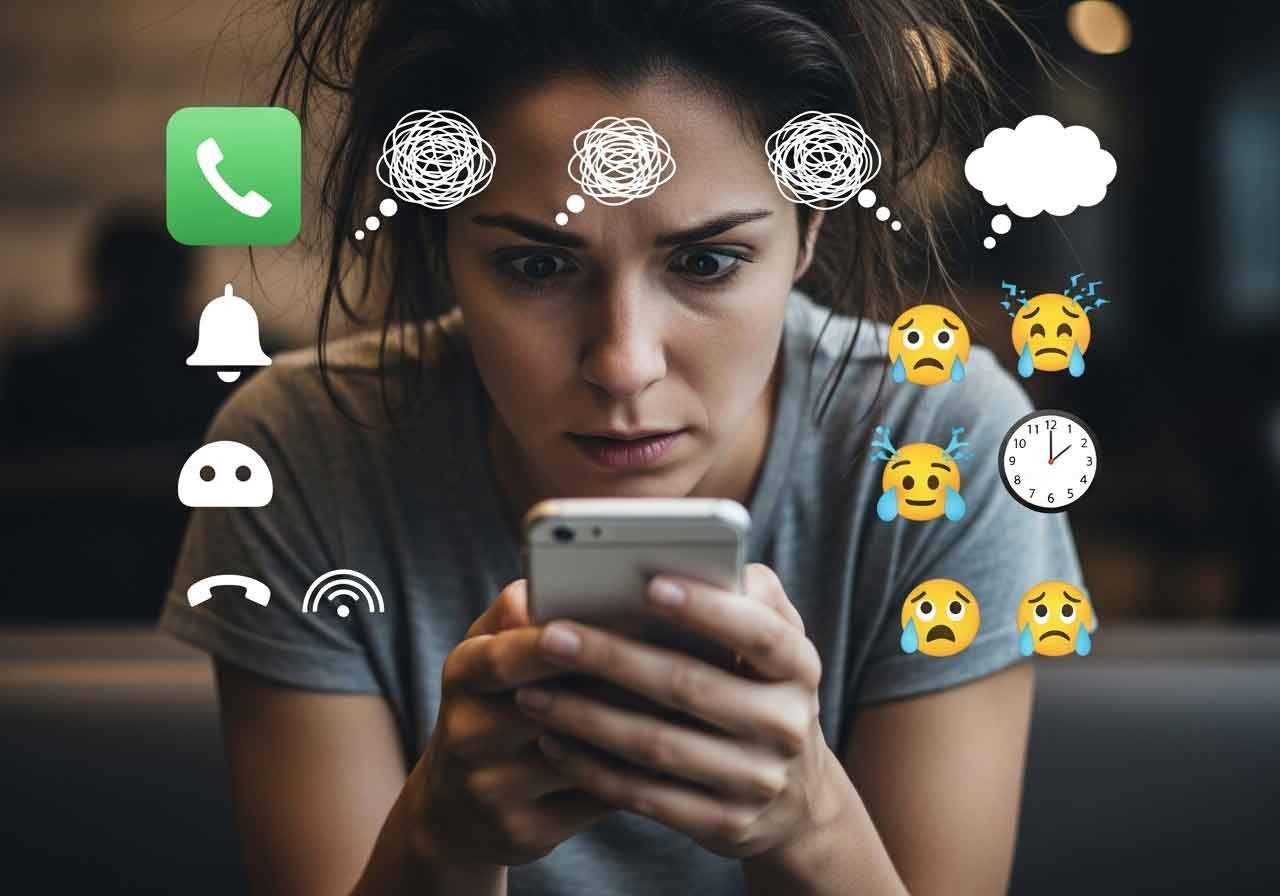
We’re drowning in digital noise. The average person checks their phone 96 times per day, switches between apps and websites nearly 400 times daily, and receives over 60 notifications before noon. If you feel perpetually distracted, exhausted by constant connectivity, or unable to focus on what matters, you’re not alone. This isn’t a personal failing; it’s a design feature of our digital environment.
The good news? Neuroscience and behavioral psychology offer proven strategies to reclaim your attention and restore your sanity. This guide cuts through the wellness platitudes to deliver actionable, evidence-based methods for digital decluttering.
"Digital minimalism isn't about abandoning technology; it's about being intentional. The question isn't whether an app brings momentary pleasure, but whether it serves your deeper values and goals."
Why a “Digital Detox” is Really a “Mental Rehab”
A digital detox isn’t about punishing yourself or living like a hermit. It’s a strategic recalibration. Think of it as mental rehab for your attention.
“We are drowning in information but starved for attention.” — A powerful reminder that our focus is our most precious resource in the digital age.
Every ping, like, and scroll competes for your cognitive bandwidth. This leads to:
Social Media Anxiety: The comparison, fear of missing out (FOMO), and performative pressure.
Mental Clutter: The swirling mix of unfinished tasks, random ideas, and digital debris that prevents deep thinking.
Attention Fragmentation: The inability to focus on one task without the urge to switch, reducing your quality of work and thought.
The goal isn’t to eliminate technology but to harness it intentionally, so it serves you instead of drains you.


The Neuroscience of Digital Overwhelm
Before diving into solutions, understanding the problem helps. Your brain wasn’t designed for the digital age. Research from the University of California, Irvine shows that after each interruption, it takes an average of 23 minutes to return to the original task. Every ping, buzz, and red notification badge triggers a cortisol response, the same stress hormone released when facing actual threats.
Studies published in the Journal of Experimental Psychology reveal that even the mere presence of your smartphone reduces cognitive capacity, a phenomenon researchers call “brain drain.” You don’t need to be using it; just knowing it’s there depletes your mental resources.
The dopamine-driven feedback loops built into social media platforms hijack your brain’s reward system, creating patterns remarkably similar to gambling addiction. This isn’t hyperbole; former tech insiders have publicly acknowledged these intentional design choices.
"Your attention is arguably your most valuable resource. Where your attention goes, your life follows. The digital world profits from your distraction, but reclaiming your focus is both possible and transformative."
The Digital Declutter: A Three-Phase System
Phase 1: The Honest Audit (Week 1)
Most people drastically underestimate their digital consumption. Before changing anything, measure your baseline.
Action steps:
- Enable screen time tracking on all devices (iOS: Settings > Screen Time; Android: Digital Wellbeing)
- Track for seven full days without modifying behavior
- Note which apps consume the most time and which trigger the strongest urges
- Identify your peak vulnerability windows (usually mornings, lunch breaks, and evenings)
Research from the University of Pennsylvania found that participants who simply tracked their usage reduced screen time by 20% through awareness alone.
Phase 2: The Ruthless Cull (Week 2)
Digital minimalism isn’t about abandoning technology; it’s about being intentional. This phase requires brutal honesty about what truly serves you.
Delete aggressively: Start with the easy wins: games you haven’t played in months, shopping apps that enable impulse purchases, and social media platforms you scroll out of boredom rather than genuine interest. A Stanford study found that participants who removed just three apps from their phones reported significant improvements in focus and mood within two weeks.
The “Does this spark joy?” test falls short here. Instagram might spark joy, but if it also sparks anxiety, envy, and time loss, the net effect is negative. Ask instead: “Does this tool help me accomplish something I genuinely value?”
Unsubscribe ruthlessly: Email newsletters, promotional messages, and notification spam. Use services like Unroll.me or manually unsubscribe. Aim for inbox zero subscriptions except for essential communications. Research shows that email overwhelm directly correlates with stress levels and decreased productivity.
Reorganize what remains: Remove all non-essential apps from your home screen. Use folders for tools you need but want to discourage mindless opening. Enable grayscale mode periodically; studies show that removing color significantly reduces the addictive pull of apps.
Phase 3: Behavioral Redesign (Weeks 3-4 and Beyond)
This is where sustainable change happens. You’re not relying on willpower; you’re engineering your environment for success.
Create friction for harmful habits:
- Delete social media apps from your phone; access only via desktop browser
- Enable two-factor authentication that requires physical security keys for distracting sites
- Use website blockers like Freedom or Cold Turkey during designated focus hours
- Place your phone in another room during meals, conversations, and work sprints
Research from the University of Chicago confirms that physical distance dramatically reduces phone checking behavior. Out of sight genuinely means out of mind.
Design your notification ecosystem: Turn off all notifications except for actual humans trying to reach you directly (calls, texts from specific contacts). News alerts, social media likes, app updates—none of these constitute emergencies. Studies show that workers interrupted by notifications make more than twice as many errors on tasks requiring focus.
Set specific “communication windows” where you batch-check messages rather than remaining in a state of perpetual partial attention. The evidence is clear: multitasking is a myth. What we call multitasking is actually rapid task-switching, and it’s cognitively expensive.
Establish phone-free zones and times: Bedrooms should be device-free sanctuaries. The blue light from screens disrupts melatonin production, and the mere presence of your phone near your bed correlates with poorer sleep quality and increased anxiety. Charge devices outside your bedroom.
Implement a “no phones before 9 AM” rule. How you start your day shapes everything that follows. Beginning with email and social media primes your brain for reactivity rather than intentionality. Successful executives increasingly adopt this practice.
Advanced Strategies: Going Deeper
Time boxing and batching: Designate specific times for checking email (perhaps 11 AM and 4 PM) and social media (if you keep it, limit to 20 minutes daily at a set time). Research on temporal constraints shows that having fixed boundaries makes it easier to resist impulses outside those windows.
The 30-day app sabbatical: Choose your most problematic app and completely remove it for 30 days. Psychologists note that this duration is sufficient to break automatic habits and gain perspective. You’ll likely discover you don’t miss it as much as you feared.
Mindful consumption triggers: Create a personal protocol before opening any potentially distracting app: pause, take three breaths, and ask, “What specifically am I hoping to accomplish?” This brief intervention activates your prefrontal cortex, the part of your brain responsible for executive function and self-control.
Analog alternatives: Rediscover paper books instead of reading on devices (studies show superior retention and less eye strain). Use physical notebooks for brainstorming. Buy an actual alarm clock instead of using your phone. Each analog swap removes a potential entry point to digital distraction.
Measuring Success: What to Expect
The benefits of digital decluttering compound over time. In the first week, expect withdrawal symptoms: phantom vibrations, reflexive reaching for your phone, and discomfort with boredom. This is normal. Your brain is recalibrating.
By week two, most people report noticeable improvements: better sleep, enhanced focus, reduced anxiety, and more presence in face-to-face conversations. Brain imaging studies show that even short breaks from excessive digital stimulation allow neural pathways associated with sustained attention to strengthen.
By week four, these changes become self-reinforcing. You’ll likely find yourself genuinely preferring longer periods of uninterrupted focus. The constant need to check your phone diminishes as your dopamine system recalibrates to more sustainable rewards.
Long-term practitioners of digital minimalism consistently report:
- Deeper work capacity and creative output
- Improved relationships and social satisfaction
- Better emotional regulation
- Enhanced sense of agency and control over their time
- Reduced decision fatigue
The Maintenance Phase: Making It Stick
Digital decluttering isn’t a one-time event; it’s an ongoing practice. Schedule quarterly audits to reassess what’s working and what’s crept back in. Technology evolves, and so must your strategies.
Build in accountability: Share your intentions with someone who will actually check in with you. Research on commitment devices shows that public accountability significantly increases follow-through.
Focus on what you’re gaining, not what you’re losing: Frame your digital declutter around the positive: more time for relationships, hobbies, creativity, and rest. People who focus on the benefits they’re moving toward sustain changes longer than those motivated primarily by avoiding negatives.
Embrace imperfection: You’ll have days when you fall back into old patterns. That’s part of being human. What matters is the overall trajectory, not perfection. Self-compassion, ironically, predicts better long-term adherence to behavior change than harsh self-criticism.
Conclusion: Your Attention Is Yours to Reclaim
Your attention is arguably your most valuable resource. Where your attention goes, your life follows. The digital world profits from your distraction, but reclaiming your focus is both possible and transformative.
This isn’t about becoming a technophobe or abandoning the genuine benefits of digital tools. It’s about designing a relationship with technology that serves your goals, values, and wellbeing rather than undermining them.
Start small. Pick one strategy from this guide and implement it this week. The research is unequivocal: you have far more control than you think. Your attention isn’t lost; it’s just been redirected. You can redirect it back.
The question isn’t whether you can change your digital habits. The question is: what will you do with the time, energy, and mental clarity you reclaim?
About implementing these strategies: Remember that lasting change comes from modifying your environment, not relying on willpower alone. Make the healthy choice the easy choice, and the unhealthy choice inconvenient. Your future self will thank you.






I love reading your blogs and watching your video. I am really impressed by the way you are doing business and I am just inspired by it!
Great tips! I’ve just discovered your Youtube channel, and I love it! Thanks for sharing your content and the day and life of a designer.
Thanks so much for the tips both in the blog and on your YouTube channel. As a new Interior Design student, I find them to be incredibly helpful, interesting, and inspirational. Keep up the great work!